As AI demand fuels a technological real estate boom across South Florida, newly implemented consumer safeguards and elite hurricane-resilient engineering are positioning local data centers as highly secure, high-yield economic anchors that protect residential ratepayers while powering the region's digital future.
The Engine Room of the Americas
At their core, data centers operate as massive "energy conversion buildings." As explained in the foundational breakdown of how data centers work, electrical power enters the facility, computational work is performed, and complex HVAC and chilled-water systems continuously remove the generated heat to prevent equipment failure. But in South Florida, these facilities do far more than just process local data—they serve as the primary digital bridge to the southern hemisphere.
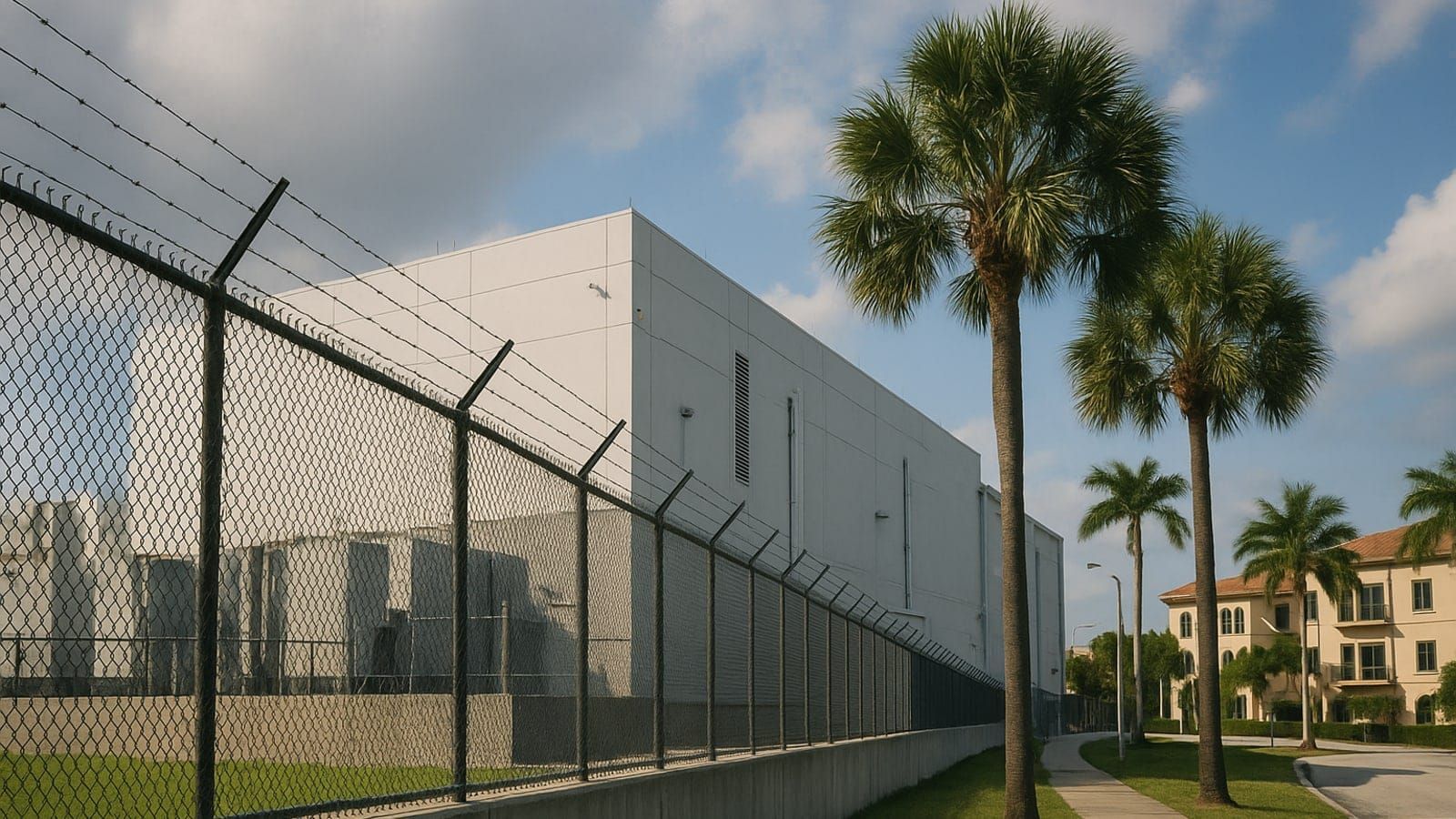
Miami currently ranks among the top five most-connected cities in the entire world. The region serves as a global interconnection hub, fortified by six active subsea cable landing points and more than 100,000 kilometers of undersea fiber-optic cabling. This sprawling subsea network physically links the United States directly to 27 nations across Latin America and the Caribbean, making South Florida's data infrastructure vital to international commerce. To safeguard these critical assets, local operators employ multi-layered, concentric physical security systems, including biometric scanners and entry-restricting mantraps.
Engineered for Category 5 Resilience
A common concern among local business owners and residents is whether these energy-intensive facilities can withstand South Florida’s notoriously severe tropical weather. The region’s premier data centers are designed to meet, and in some cases exceed, the most stringent disaster-preparedness standards in the world.
Consider the 750,000-square-foot Equinix MI1 facility, known as the NAP of the Americas, located in Downtown Miami. The structure is built with seven-inch-thick steel-reinforced concrete panels designed to withstand Category 5 hurricane-force winds of up to 175 miles per hour. Furthermore, the facility's data center floors start at 32 feet above sea level, placing the critical infrastructure entirely outside of FEMA’s 500-year designated flood zone and the Miami-Dade hurricane evacuation zone.
This exceptional durability has turned data centers into safe havens for essential public services during extreme weather events. In Jacksonville, Florida’s largest community-owned utility, JEA, opted to relocate its Emergency Operations Center (EOC) directly into a local data center specifically because of its proven ability to survive Category 5 storms without losing power or connectivity.
Legislative Safeguards for Everyday Floridians
With modern AI workloads demanding unprecedented levels of power, Florida has taken proactive legislative steps to ensure that the expansion of technology infrastructure does not burden local residential utility consumers. In May 2026, Governor Ron DeSantis signed a landmark data center bill directing the Florida Public Service Commission (PSC) to guarantee that large power users bear their own cost of service.
Under this regulatory framework, Florida Power & Light (FPL) implemented a "large-load rate structure." This policy requires data center developers to pay 100 percent of the costs associated with any new power generation and grid upgrades required to serve them, shielding Florida families from subsidizing private tech expansion.
These regulations are already being actively enforced to protect consumers. When Duke Energy Florida recently attempted to bypass these consumer protection laws in their proposed rates, Florida’s state consumer advocate stepped in with a formal legal challenge.
In fact, when executed correctly, data center development actually stabilizes the local power grid. Because data center operators commit to steady, long-term power purchase agreements, utilities like FPL can utilize this guaranteed revenue to invest in grid resilience. This financial stability ultimately puts downward pressure on fixed system costs, which can lower residential utility rates over the long term.
Economic Boost and Low Municipal Strain
Florida currently hosts approximately 120 operating data centers, and the economic benefits of this growing sector are profound. Constructing a single 1-gigawatt (GW) data center facility in Florida creates approximately 45,367 temporary construction jobs and 5,322 high-paying, permanent operations and IT positions, with salaries averaging between $80,000 and $92,000 annually. Over time, a single facility can generate more than $405.8 million in recurring state and local tax revenues.
Unlike traditional logistics warehouses, massive manufacturing plants, or retail developments, operational data centers place minimal strain on local communities. They generate virtually no local traffic congestion, do not increase housing demand or public school district enrollments, and consume minimal public resources relative to the massive tax yields they provide.
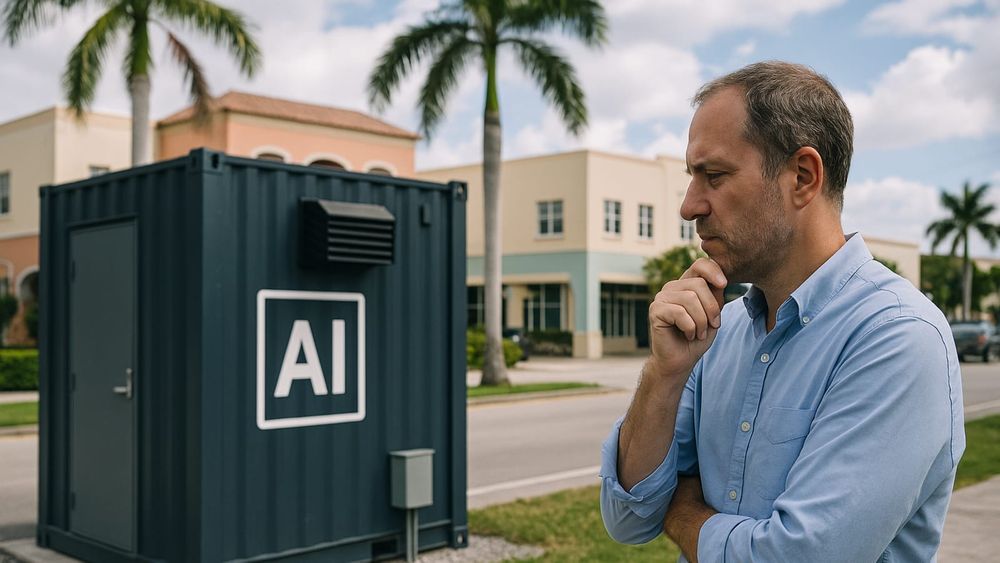
This favorable balance of high yield and low community strain has sparked a wave of active South Florida developments. Current projects include two major data centers under construction in Miami-Dade County, a newly proposed "micro-data center" integrated directly into an office complex in South Miami-Dade, and a massive 1-million-square-foot facility proposed for Palm Beach County.
These upcoming projects are being built to handle the next generation of computing. While traditional servers rely on standard mechanical air-cooling, modern AI clusters—which run intense GPU workloads requiring up to 132 kilowatts per rack—generate heat that far exceeds traditional capacities. Consequently, South Florida’s newest facilities are integrating cutting-edge liquid-to-chip and direct liquid-immersion cooling systems to safely and efficiently manage heat, securing South Florida's status as a premier hub for the global AI revolution.
Disclosure: This article was drafted with AI assistance by The Sundaze Gazette editorial team and reviewed before publication.
Source: Based on foundational reporting from the YouTube video 'How Data Centers Actually Work'. — https://youtu.be/cTwvUqLNQrM?si=yqIXh8s7hG40nrhI