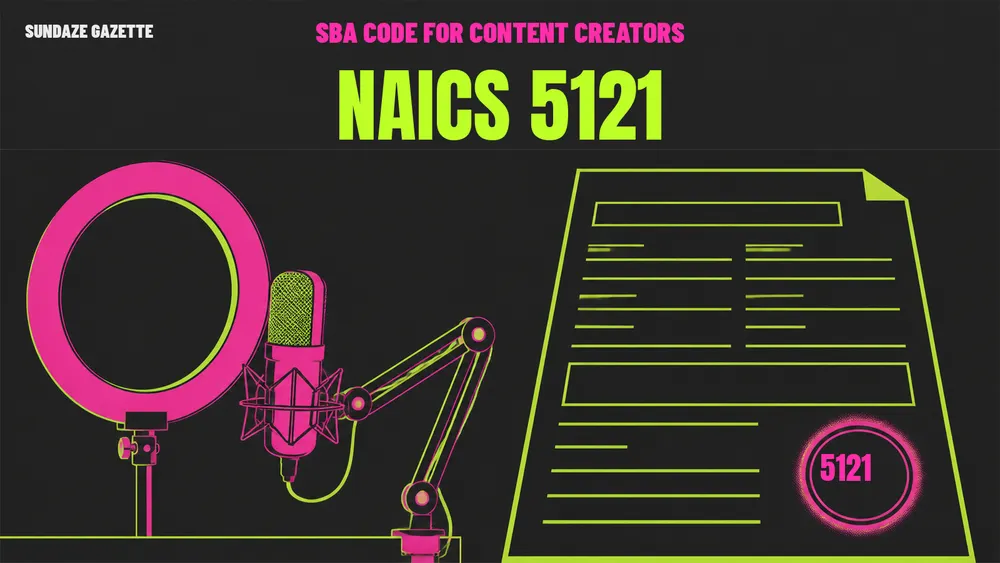
Picture a Wynwood YouTuber with three part time editors, a podcast feed and a brand deal pipeline, filling out a loan application and stopping at the line that asks for an industry code. For years, many creator businesses guessed. On Oct. 15, 2026, the U.S. Small Business Administration offered a clearer answer: qualifying content creators should start with NAICS 5121, Motion Picture and Video Industries, when they determine eligibility for SBA programs.
The guidance ties directly into the SBA's official size standards, the rules that decide whether a business counts as small for SBA loans and federal contracting. The SBA release, republished in full by the Creators Guild of America, calls it the first federal small business classification guidance that specifically recognizes qualifying content creators within the agency's lending and contracting framework.
For South Florida's podcasters, streamers, video producers, creative agencies and production shops, this is paperwork, not a payout. But paperwork decides who qualifies, and getting the code right can make the difference in a lender's file.
What the SBA Announced
According to the release, the SBA clarified that the nation's 27 million creator led businesses are classified under NAICS 5121 for purposes of SBA program eligibility. The agency said the clarification follows its recent proposal to update small business size standards and reflects "the robust growth and evolving business models of America's creator economy."
SBA Administrator Kelly Loeffler described the move as recognition. "For the first time, the SBA is recognizing these enterprising content creators within our small-business framework," she said in the release. "This historic guidance cuts through outdated classifications and gives qualifying creators greater clarity as they build businesses, create jobs, and compete and build for the future."
The release also included statements from the Creators Guild of America and from TikTok U.S. Daniel Abas, founder and president of the guild, said, "Content creators are small businesses, and always have been."
What NAICS 5121 Covers
NAICS stands for the North American Industry Classification System, the coding system federal agencies use to sort businesses by industry. A four digit number such as 5121 identifies an industry group. Inside each group are more specific six digit codes, and those six digit codes are what size standards attach to.
The SBA release lists the kinds of creator led businesses whose principal activity falls within the 5121 umbrella: filmmakers, video producers, podcasters, streamers, gamers, digital publishers, social media entrepreneurs, creative agencies and other businesses that produce and distribute original audiovisual content.
The agency's instruction is specific. Those businesses "should begin with NAICS 5121 and identify the applicable six-digit NAICS code within that industry group that best matches their primary business activity." In other words, 5121 is a starting point. The final code should describe what the business mainly does, whether that is production, postproduction or distribution.
Why Creators Needed the Guidance
The SBA said content creator businesses have long been eligible for SBA support when they meet program requirements. What was missing was clarity. Creators "previously lacked clear guidance on the NAICS code that best reflects their integrated business models," the release says.
The reason is the way creator businesses work. The SBA noted that today's creators often produce, edit, distribute, market and monetize original audiovisual content across multiple platforms and revenue streams. A single creator company might look like a production studio one month, an ad agency the next and a media publisher after that. Without guidance, two similar businesses could pick very different codes.
The agency also tied the clarification to its pending size standards proposal. According to the release, the proposed size standards adopt revisions to NAICS "to simplify the size standards for related motion-picture, video-production, post-production, and distribution activities under NAICS 5121."
What It Does Not Do
The guidance does not create a creator grant, a dedicated loan fund or a guaranteed approval. It does not announce a dollar amount. The release frames it as classification guidance for existing programs, and says the SBA is "helping qualifying creator-led businesses determine their small-business status and navigate opportunities for SBA-backed financing and other agency resources."
Every applicant still has to meet the underlying rules. Federal regulations at 13 CFR 120.100 say that to be eligible for an SBA business loan, an applicant must be an operating business, be organized for profit, be located in the United States and be small under the size requirements of the agency's size regulations, including affiliates. The same subpart lists types of businesses that are ineligible, such as nonprofits and businesses primarily engaged in political or lobbying activities.
The release also points to one open question. The SBA said it received comments asking for an industry exception specifically for content creators, which would permanently house creator led businesses. The agency said it will consider those comments, along with all public feedback on the proposed rule, after the public comment period closes on Nov. 20. Until then, a creator specific exception is a request under review, not a final rule.
Why It Matters in South Florida
South Florida has a deep bench of businesses that fit the SBA's list: production companies working on commercials and branded content, podcast studios, livestream and gaming creators, Spanish language digital publishers, post houses and creative agencies serving tourism, hospitality and real estate clients.
Many of those firms run lean, with an owner and a handful of contractors, and many rely on equipment, studio space and working capital that a lender might finance. Clear classification helps a lender understand the business and match it to the right size standard. It also helps when a creator company pursues federal contracting, where NAICS codes appear on solicitations.
For creators already working in film and commercial production, the guidance also sits alongside state and local film programs that use their own definitions. A business can be a video producer for an SBA application and still need to meet entirely separate rules for a local film incentive or permit.
How to Pick a Six Digit Code
The SBA's direction is to pick the six digit code within 5121 that best matches the primary business activity. A few practical steps help:
- List revenue by source for the last 12 months, such as sponsorships, platform payouts, production fees, licensing and services for clients.
- Identify the activity that produces the largest share of revenue. That is usually the best guide to principal activity.
- Review the six digit codes under 5121 on the SBA's size standards resources and the Census Bureau's NAICS site, and choose the one that describes that activity.
- Check the size standard attached to that code, and include affiliates when measuring size, as the regulations require.
- Use the same code consistently across loan applications, federal registrations and bids, unless the business genuinely changes.
Creators who split their time between very different lines of work, such as a podcast network that also runs a marketing agency, should document why the chosen code fits. A lender may ask.
Where to Get Free Help
The SBA operates through a network of local partners. Its local assistance finder lists Small Business Development Centers, SCORE mentors and Women's Business Centers, and the agency's 7(a) loan page explains the agency's main loan program. In Florida, the Florida SBDC Network offers no cost consulting to small businesses.
A useful first meeting covers three questions: which six digit code fits the business, whether the business is small under that code's standard, and which program fits the need, whether that is equipment, working capital or a studio build out.
A Creator Checklist for the Next 30 Days
- Gather two years of business tax returns and year to date financials, separated from personal accounts.
- Write a one paragraph description of the business that matches the chosen six digit code.
- Confirm the business is organized for profit and operating, two basic loan requirements in the regulations.
- Book a session with an SBDC adviser or SBA lender before applying.
- Track the SBA's size standards proposal, since public comments close Nov. 20.
Sources
SBA release of Oct. 15, 2026, republished by the Creators Guild of America; SBA size standards; 13 CFR Part 120, Subpart A, eligibility rules; SBA 7(a) loans; SBA local assistance; U.S. Census Bureau NAICS.
Related
More for South Florida creators: Florida film incentives explained and what Spotify's new membership fees mean for creators.
Key Facts
What did the SBA announce for content creators?
On Oct. 15, 2026, the U.S. Small Business Administration issued guidance that qualifying content creator businesses are classified under NAICS 5121, Motion Picture and Video Industries, for SBA program eligibility. The agency called it the first federal small business classification guidance specifically recognizing creators within its lending and contracting framework, following a size standards proposal.
Who counts under NAICS 5121?
The SBA release lists filmmakers, video producers, podcasters, streamers, gamers, digital publishers, social media entrepreneurs, creative agencies and other businesses that produce and distribute original audiovisual content. Those businesses should begin with NAICS 5121, then pick the six digit code inside that group that best matches their primary business activity, the agency said.
Does the guidance give creators money?
No. The guidance clarifies classification for existing SBA programs and does not create a grant, a dedicated loan fund or guaranteed approval. Applicants still must meet program rules, including those in 13 CFR 120.100, which require an operating, for profit, United States business that is small under SBA size standards, including affiliates.
Is a creator industry exception coming?
Not yet. The SBA said it received comments asking for an industry exception that would permanently house creator led businesses. The agency said it will consider those comments with all other public feedback on its proposed size standards rule after the public comment period closes on Nov. 20, 2026. Any final decision remains pending.
Where can Florida creators get help applying?
Creators can start with the SBA local assistance finder, which lists Small Business Development Centers, SCORE mentors and Women's Business Centers. The Florida SBDC Network offers no cost consulting statewide. A first session should confirm the right six digit code, the matching size standard and which SBA loan program fits the business need.