A Set That Brings the Location Indoors
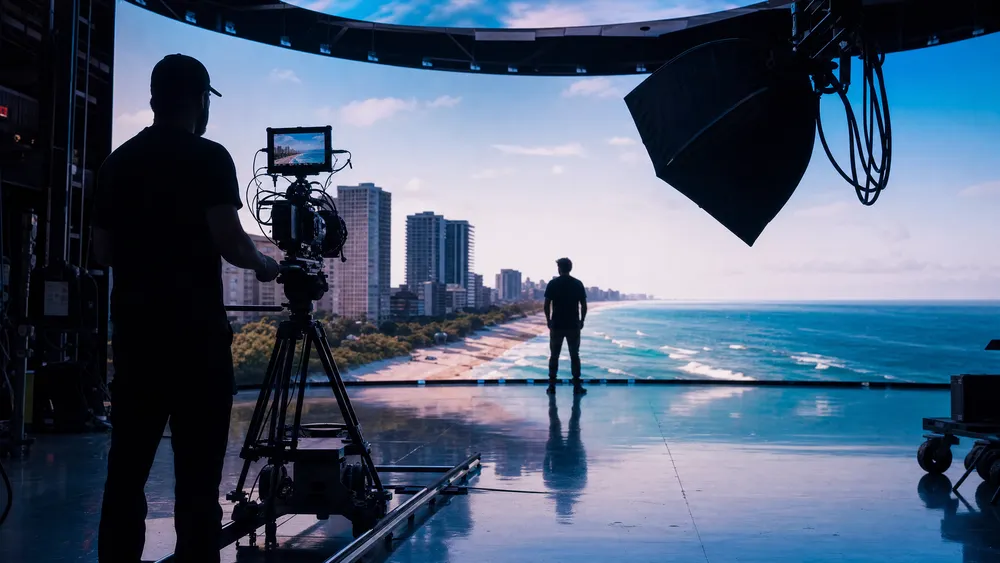
Virtual production swaps a trip to the location for a wall of light. Instead of shooting actors against green and building the world later, a crew films in front of an LED wall or a tracked green screen while a real-time engine, most often Unreal Engine, renders the background as the camera moves. The scene, the reflections and much of the lighting are captured in camera, so the director sees something close to the finished frame on the day.
For South Florida producers, the appeal is practical before it is futuristic. Summer storms, heat, traffic and permits can all bend a location schedule, and a stage keeps the work indoors. The region now has several rooms built for this kind of shooting, from a dedicated LED volume in Deerfield Beach to a broadcast campus in Miami, and knowing what each one actually offers is the first step to budgeting a shoot around it.
Who Has the Walls
BrandStar Studios, which says it was among the first studios in the United States to adopt LED volumes and in-camera visual effects, lists two South Florida facilities on its studios page. Its Deerfield Beach location has a 2,000-square-foot LED volume along with kitchen sets, edit suites and an audio booth. Its Hollywood campus is described as a 30,000-square-foot studio for practical shoots, set builds and large-scale virtual productions, with a main LED stage of 60 feet wide by 18 feet high, fashion studios with cyc walls, an on-site workshop and five loading docks, about 15 minutes from Fort Lauderdale-Hollywood International Airport.
The company has been building this capability for several years. In 2021 BrandStar announced an investment in virtual production, augmented reality and mixed reality equipment. In June 2023 it signed a multi-year agreement with GRUP MEDIAPRO to run a virtual production stage at Mediapro’s facility in Miami-Dade County, with a 1,000-panel LED wall the companies described as about 22 feet tall by 80 feet wide. BrandStar’s current locations page lists Deerfield Beach and Hollywood, so producers interested in the Miami-Dade wall should ask Mediapro and BrandStar directly about current access.
Across the county line, Telemundo Center in Miami rents stages through TC Production Services. Its studios page lists sound stages from 700 to 8,000 square feet and calls the campus Category 5 hurricane-ready. Studios K and L, which it pitches for commercials, music videos and virtual production, include a 65-by-48.5-foot green cyclorama that the center calls one of the largest green screens in South Florida, with camera tracking powered by Unreal Engine and an in-house real-time graphics team.
LED Volume or Green Screen
The two approaches solve different problems. An LED wall puts the environment in front of the lens and on the talent, which helps with reflective surfaces, natural skin light and performances that react to what the actors can see. A tracked green screen trades some of that realism for a bigger, more flexible space and backgrounds that can still be adjusted after the shoot.
The right choice depends on the job. A car spot full of chrome, a music video that needs a sunset on repeat or a branded series shot over many days may justify an LED stage. A product demo, a talking-head explainer or a shoot that needs a large floor may work just as well on green. Either way, the environments have to be built before the shoot, which moves money and decisions earlier in the schedule than many owners expect.
What to Ask Before You Book
None of these studios posts a public day rate, so every booking starts with a quote. Ask what the stage fee includes: the wall or cyc, the engine operator, camera tracking, the content build and any pre-light day. Ask who builds the virtual environments, how many revisions are included, and whether you own the finished assets or only license them for this shoot.
Ask about the practical side as well: loading access, parking, power, green rooms and hair and makeup space. Schedule a test day if the budget allows, since a short camera and lens test on the actual wall is cheaper than discovering a moiré or color problem on the shoot day. Finally, plan a fallback for hurricane season, even at a stage built to ride out a storm, because crew travel and client schedules still move with the weather.
Where It Fits for Small Teams
Virtual production is not only for features. Studios in the region pitch it for commercials, music videos, television and hybrid events, and that is where many South Florida owners and creators will meet it first. A brand that would otherwise fly a crew to a mountain or a city skyline can test whether a day on a stage costs less than the trip.
The smartest first step is a small one. Book a walk-through, bring one concrete idea, and ask the studio to show you a past project at a similar budget. That conversation will tell you quickly whether the wall belongs in your plan this year or the next.
Updated Oct. 9, 2026: studio specifications rechecked against BrandStar Studios and TC Production Services.
Sources
- BrandStar Studios, studios and locations page
- Business Wire, BrandStar Studios virtual production investment, Sept. 23, 2021
- Business Wire, GRUP MEDIAPRO and BrandStar Studios agreement, June 20, 2023
- TC Production Services, Telemundo Center studios
Related reading: Fort Lauderdale Studio Moves Forward With Buffalo FilmWorks; Film Lauderdale's 15 to 30 percent rebates; and the Film Incentives and Rebates in South Florida hub.
Key Facts for Owners and Search
What is virtual production?
Virtual production films actors in front of an LED wall or a tracked green screen while a real-time engine, usually Unreal Engine, renders the background as the camera moves. Much of the scene, its reflections and its lighting are captured in camera, so directors see something close to the finished frame on the shoot day instead of waiting for post.
Where can South Florida producers find LED volumes?
BrandStar Studios lists a 2,000-square-foot LED volume in Deerfield Beach and a Hollywood campus with a 60-by-18-foot main LED stage. In 2023 BrandStar and GRUP MEDIAPRO also announced a roughly 22-by-80-foot LED wall at Mediapro’s Miami-Dade facility. Producers should ask both companies about current access to that wall.
Does Telemundo Center offer virtual production?
Yes. TC Production Services lists Telemundo Center stages from 700 to 8,000 square feet in Miami. Studios K and L include a 65-by-48.5-foot green cyclorama that the center calls one of the largest green screens in South Florida, with Unreal Engine camera tracking and an in-house real-time graphics team. The campus is described as Category 5 hurricane-ready.
How much does a virtual production day cost?
None of the South Florida studios named here posts a public day rate, so every booking starts with a quote. Ask what the stage fee covers, including the wall or cyc, the engine operator, tracking, environment builds and pre-light time, and confirm who owns the virtual environments after the shoot. A short test day can prevent costly surprises.
Is virtual production only for feature films?
No. South Florida studios market their stages for commercials, music videos and hybrid events as well as film and television. For small brands and creators, the practical test is whether one day on a stage costs less than traveling a crew to the location, and whether the environments can be reused across several pieces of content.