On June 2, 2026, Homestead startup Ready Set Fund Grow launched an Opportunity Zone Fund to finance a regional network of localized artificial intelligence micro-datacenters, bypassing Wall Street to bring computing power directly to South Florida municipalities.
The Homestead Flagship Infrastructure
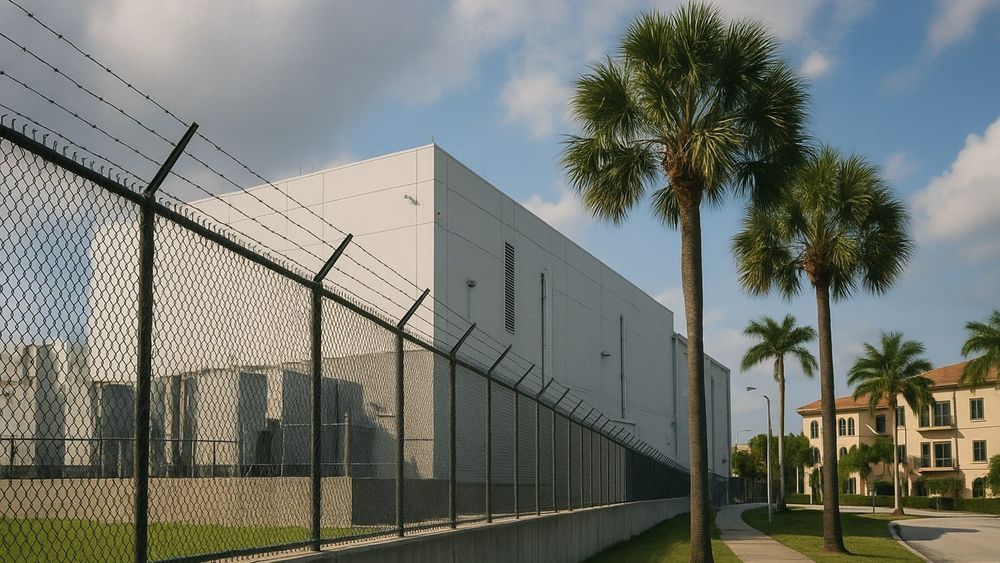
Ready Set Fund Grow (RSFG), a subsidiary of Farrington Capital Group, is spearheading "The Fish Bowl" initiative under its broader "Bridge 2 Connectivity" project. The first planned deployment sits along the high-traffic US-1 corridor at 23095 S Dixie Hwy in Homestead. The project utilizes a 20,000-square-foot commercial parcel housing a 2,295-square-foot building. While early marketing materials described the facility as active, a Miami Herald report on proposed data centers clarified that the physical site remains in a phased rollout.
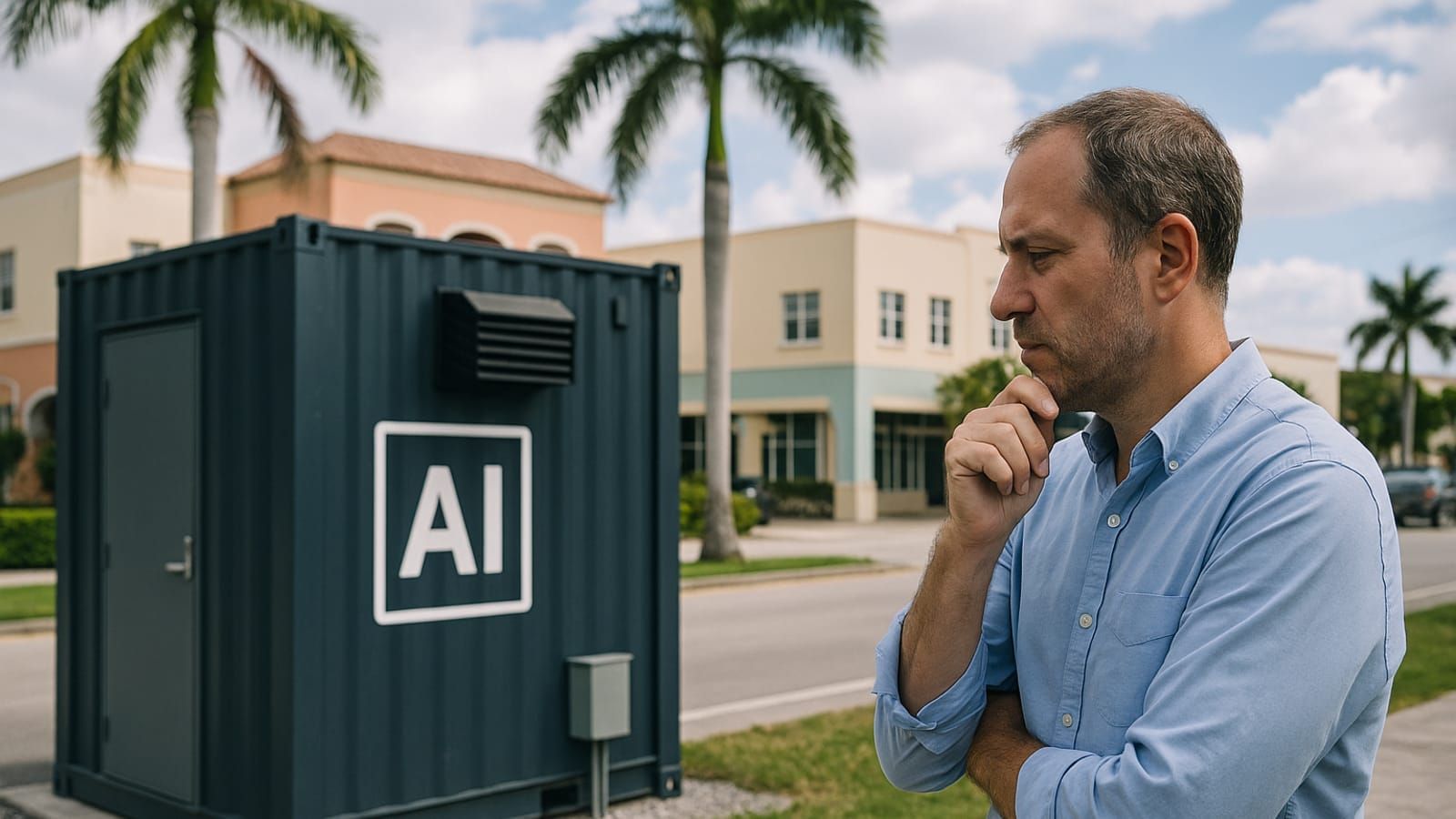
The planned Homestead facility will house a 10-rack, 80kW edge computing micro-datacenter. The technical architecture relies on a glass-enclosed, liquid-cooled setup designed to process high-density graphics processing unit (GPU) workloads. By processing data locally rather than routing it to distant hyperscale hubs, the micro-datacenter targets near-zero latency. This speed is vital for localized traffic management, smart-grid operations, and rendering tasks within the regional creator economy. The site will maintain compliance with HIPAA, SOC 2, and PCI-DSS security standards to attract healthcare providers, small businesses, and regional software developers.
RSFG designed a four-pillar revenue model to maximize space efficiency on the commercial parcel. The flagship integrates the secure colocation micro-datacenter with a co-working incubator featuring 25 workstations. The facility also includes a virtual office hub and outdoor electric vehicle charging stations. This combination generates independent income streams while upgrading public infrastructure in a federally designated Targeted Urban Area.
Sovereign Computations and Local Partnerships
Local ownership of computational infrastructure remains central to the startup's model. Alfred Leroy Farrington II, Vice President of Business Development and Community Outreach for RSFG, stated that the initiative makes every city a node on a sovereign AI grid. He added that the model ensures infrastructure remains tailored to the economic needs of the local community.
The company expanded the utility of its proposed grid through tactical software integrations. On April 7, 2026, Remergify, Farrington Capital Group, and Near Infrared Imaging formalized an agreement to launch "AI Buddy." The system integrates patented near-infrared diagnostic hardware with automated neural network software. RSFG plans to run these medical diagnostic workflows locally inside its edge micro-datacenters, allowing rapid clinic processing.
To train local entrepreneurs, RSFG and Remergify also turned to educational technology. On May 21, 2026, the companies announced an integration with Canvas by Instructure to power a specialized Learning Management System. The e-learning hub provides training modules designed to help small business owners transition their businesses into funding-ready operations.
Tokenized Funding and Capital Gains Tax Deferral
Financing micro-datacenters requires substantial upfront investment, a challenge RSFG is meeting through tax-advantaged capital structures. Large technology firms have faced liquidity pressures, highlighted by Alphabet executing an 80 billion dollar stock sale and Berkshire Hathaway making a 10 billion dollar investment in enterprise AI. RSFG chose a different path, structuring its capital raise through a Qualified Opportunity Fund under the federal Tax Cuts and Jobs Act.
The fund bypasses traditional investment banking channels by pairing the opportunity zone tax benefits with an active AI Compute-as-a-Service operating business. This structure provides accredited investors with a 10-year tax-free growth horizon on capital gains. To broaden investor participation, RSFG announced the tokenization of its Qualified Opportunity Fund on March 24, 2026. Handled under Regulation D, Rule 506(c), the tokenization allows verified investors to acquire fractionalized shares of the digital real estate venture.
Operational leadership solidified during this fundraising push. Stuart Fine, the founder of technology marketplace Remergify, took the role of Acting CEO of RSFG in March 2026 to oversee the physical and digital buildout. Remergify co-manages the active raise alongside Farrington Capital Group. Even as Remergify signed a letter of intent on June 2, 2026, to sell its Wipeboard software platform to Utilicraft Aerospace Industries, the firm retained all intellectual property and rights to Ready Set Fund Grow.
The South Florida Data Center Expansion
The Homestead project aligns with a broader surge in digital infrastructure development across South Florida. Municipalities throughout the region are fielding proposals for high-density computing projects as tech firms migrate to the area. Developers are looking beyond Miami-Dade County to establish major computational hubs.
In Palm Beach County, the 202-acre "Project Tango" proposal seeks to rezone land at 20125 Southern Blvd for a massive data center and warehouse complex. Meanwhile, Miami-Dade developers have proposed the Metrobloks facility at 500 NW 137th Ave. These developments illustrate the regional race to expand compute capacity as consumer and enterprise demand climbs.
RSFG and Remergify are taking their municipal-first development strategy nationwide. The partners launched a tour on May 22, 2026, to present their opportunity zone framework to regional economic development departments. The founders argue that local public-private partnerships can bypass regional power grid bottlenecks. By establishing independent, localized computing nodes, South Florida municipalities can secure proprietary technology assets without relying on federal taxpayer funding.
Disclosure: This article was drafted with AI assistance by The Sundaze Gazette editorial team and reviewed before publication.