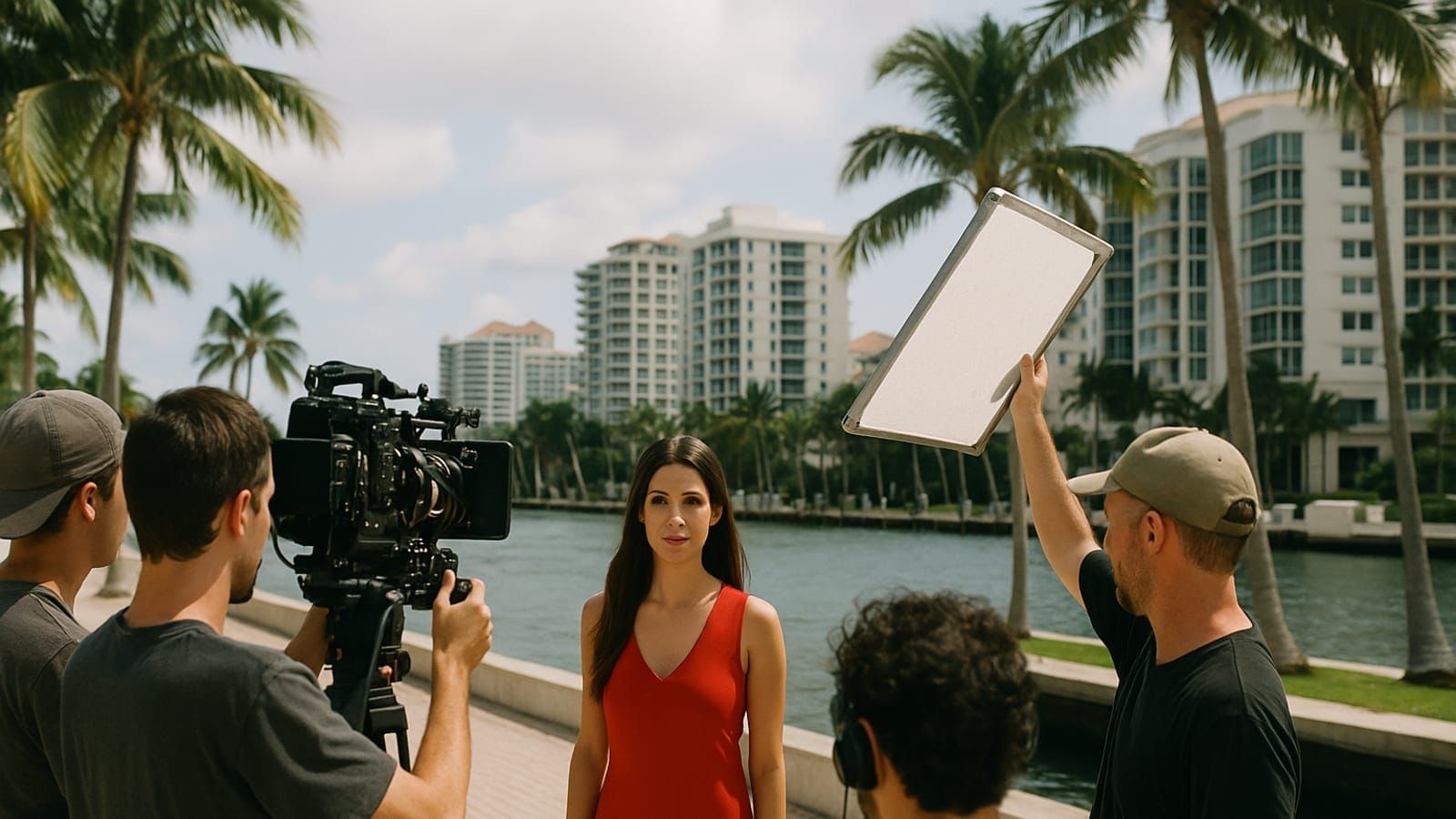
South Florida county rebate programs are capturing a surge of incoming, corporate-funded independent film productions as global brands bypass advertising agencies to finance their own feature-length movies. These local initiatives offer targeted financial relief, filling a statewide incentive vacancy and establishing the region as a primary landing zone for brand-led entertainment.
The Corporate Shift to Branded Capital
Corporate brands are altering traditional entertainment financing by establishing their own production offices to fund long-form storytelling. In a July 2026 social media post, James Crane predicted that investment in low-budget films will surge in a big way. Crane joined the talent management and production company Sugar23 as Director of Business Development in April 2025, following a six-year tenure as a talent agent at Buchwald from May 2019 to March 2025. This James Crane is distinct from James Robert Crane, the owner of the Houston Astros baseball franchise.
This brand-funded financing model differs from traditional independent equity and standard studio systems. Crane detailed this transition in VML Intelligence’s The Future 100 2026 report, noting that companies will produce and fund films and television. He predicted that the next White Lotus might actually be produced by the Four Seasons.
Several global companies already lead this transition. Sugar23 partnered with global studio Fifth Season on December 2, 2024, to launch a branded entertainment joint venture, aiming to co-finance over $100 million in television and film production over three years. Starbucks collaborated with Sugar23 to launch Starbucks Studios on June 10, 2024, to focus on original storytelling. In June 2026, Bose introduced Bose Studios, a music-focused platform backed by Sugar23. The initial Bose slate includes a documentary project from director Steven Soderbergh and the creation of an in-house record label. Other major brands are following this path. The Ad Council partnered with Sugar23 in August 2025 to launch Ad Council Entertainment, while Gap Inc. appointed its first Chief Entertainment Officer in February 2026.
Broward County's Targeted Rebate Structures
Florida has lacked a statewide film tax credit program since its previous initiative expired in 2016. Local municipalities have established their own incentives to attract corporate projects that bypass traditional high-cost studio infrastructure. These county-level rebates align with the typical budgets of brand-funded films.
Broward County, operating through Film Lauderdale, offers several distinct rebate programs. The standard film and television program provides a 20% performance-based rebate on a minimum Broward County spend of $400,000, with a cap of $800,000. For television productions, the Scripted Series Program offers a 25% rebate capped at $5 million per season, requiring a minimum county spend of $12 million.
Production groups planning multiple projects can utilize a 30% rebate on a minimum spend of $4 million. To qualify, companies must commit to producing two scripted projects over a three-year period, with rebates capped at $2.5 million per project. For local creators, Broward offers an Emerging Filmmakers Grant. This program provides a $10,000 grant to filmmakers with three years of original work, requiring proof of matching funds.
Miami-Dade Incentives and Statewide Exemptions
Miami-Dade County launched its High Impact Film Fund Program in May 2024. The program holds $50 million in total funding over five years, capped at $10 million per fiscal year. This initiative provides up to a 20% cash rebate for productions that reach a $5 million minimum local spend. The program enforces strict local hiring guidelines. To qualify, productions must complete 90% of their Florida-based shoot days in Miami-Dade County. The crew must consist of at least 60% county residents, and 70% of hired vendors must be registered Miami-Dade businesses.
Filmmakers can stack county rebates with Florida's statewide Production Sales Tax Exemption under Florida Statute Section 212.08. This certificate removes the 6% state sales tax and county surtaxes, providing up to a 7.5% exemption on hardware purchases and equipment rentals. Out-of-state brands utilize local rental companies to meet these local spending guidelines. Rental providers, including Moving Picture Rental, package camera, grip, and lighting equipment to help productions satisfy local expenditure thresholds from their Miami and Fort Lauderdale locations.
The Economics of Branded Production and Local Competition
The transition toward corporate-funded entertainment alters the financial risk of independent film production. Independent projects often struggle to secure distribution or generate profits through traditional box office sales. Brand studios bypass these metrics, measuring success through audience engagement and brand affinity. This framework allows filmmakers to secure production backing without traditional box office pressures.
South Florida faces rising regional competition for these mid-budget corporate projects. In March 2026, Orange County launched a competitive $25 million film incentive program under administrator Jen Pennypacker. The program distributes $5 million each year through fiscal year 2030, offering a 20% cash rebate on a minimum spend of $400,000. This program challenges South Florida's rebate structures for brand productions.
Because brand-backed studios operate on condensed schedules compared to traditional Hollywood projects, processing speeds and immediate vendor access determine where projects shoot. The combination of South Florida county rebates, state sales tax exemptions, and specialized equipment packages provides an environment for brand-led studios to deploy capital and employ local workers.
Disclosure: This article was drafted with AI assistance by The Sundaze Gazette editorial team and reviewed before publication.
Source: This article was inspired by a prediction shared by James Crane on Instagram. — https://www.instagram.com/reel/Dag2dTep4V_/?igsh=MWkxajdlN2RveWZhcg==