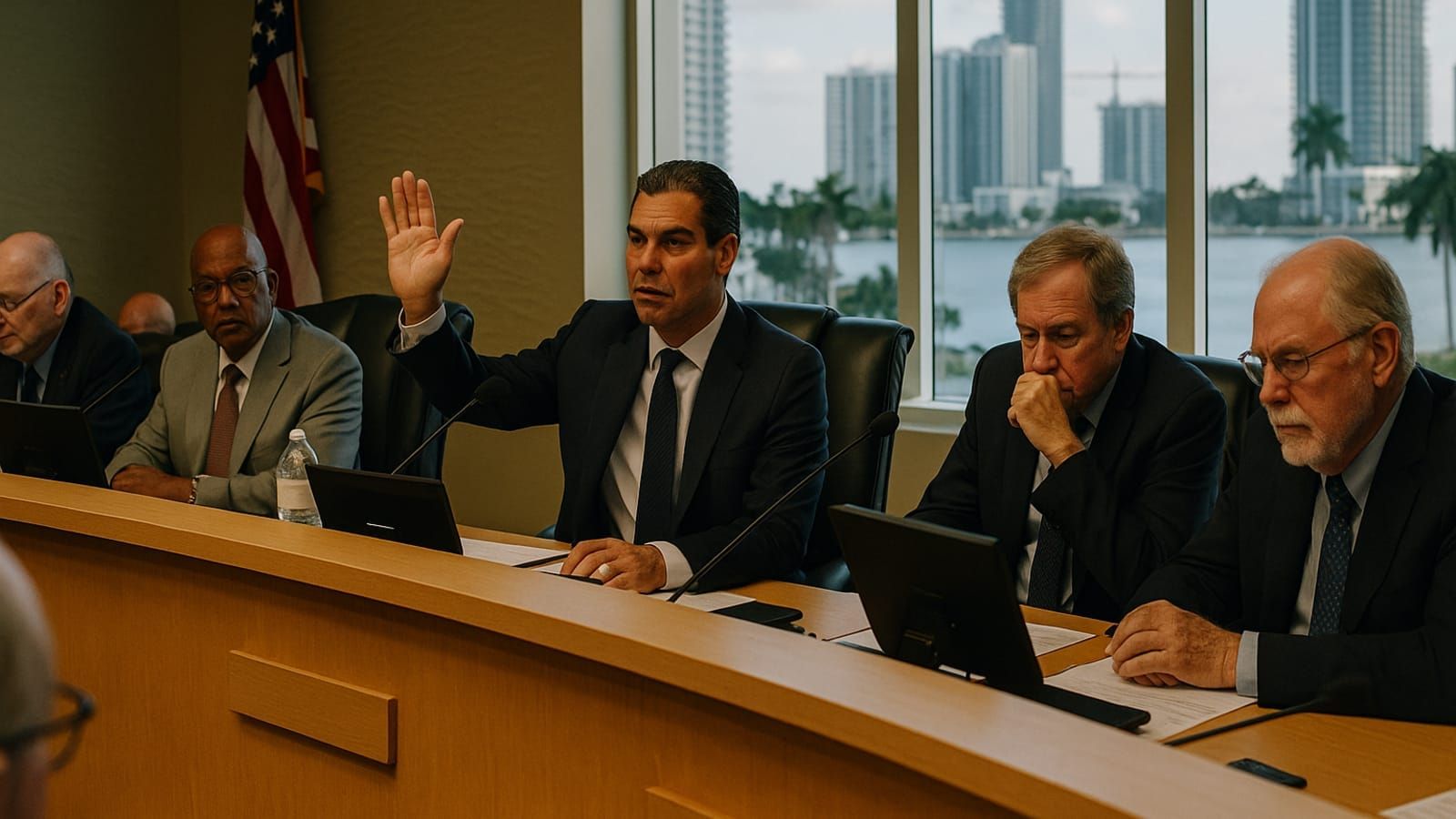
On June 25, 2026, the Miami City Commission voted unanimously to explore a formal legal challenge against Florida’s Live Local Act, setting up a direct confrontation over local zoning control as state mandates strip municipal authority. The 4-0 vote, with District 1 Commissioner Miguel Gabela absent, directs City Attorney George Wysong to analyze potential constitutional and home-rule claims against the state.
The directive, sponsored by District 2 Commissioner Damian Pardo and co-sponsored by Commission Chairwoman Christine King, signals a sharp escalation in local pushback against the legislation. The state law, initially enacted in 2023, overrides local zoning regulations to encourage workforce and affordable housing development.
The Overriding of Miami 21 Zoning
During the commission hearing, Planning Director David Snow testified that the state law overrides Miami 21, the city’s form-based zoning code adopted in 2009. The planning department developed Miami 21 after a five-year public process to control density and protect historic residential neighborhoods.
Under the Live Local Act, developers proposing projects on commercial, industrial, or mixed-use land can bypass these rules. The law permits developments to reach densities of 1,000 units per acre and heights that match the tallest building within a one-mile radius. This provision removes the oversight of the Urban Development Review Board and the Wynwood Design Review Board.
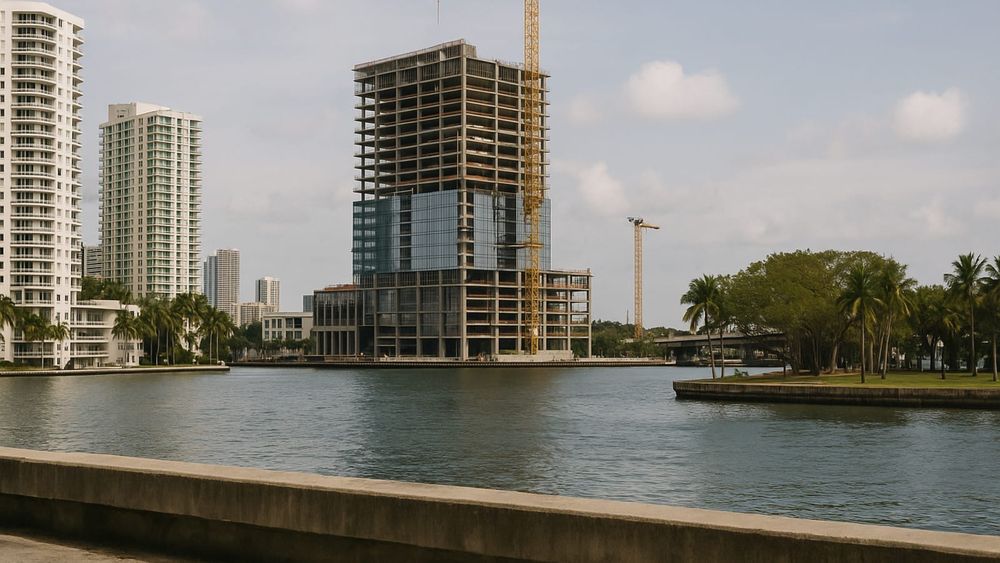
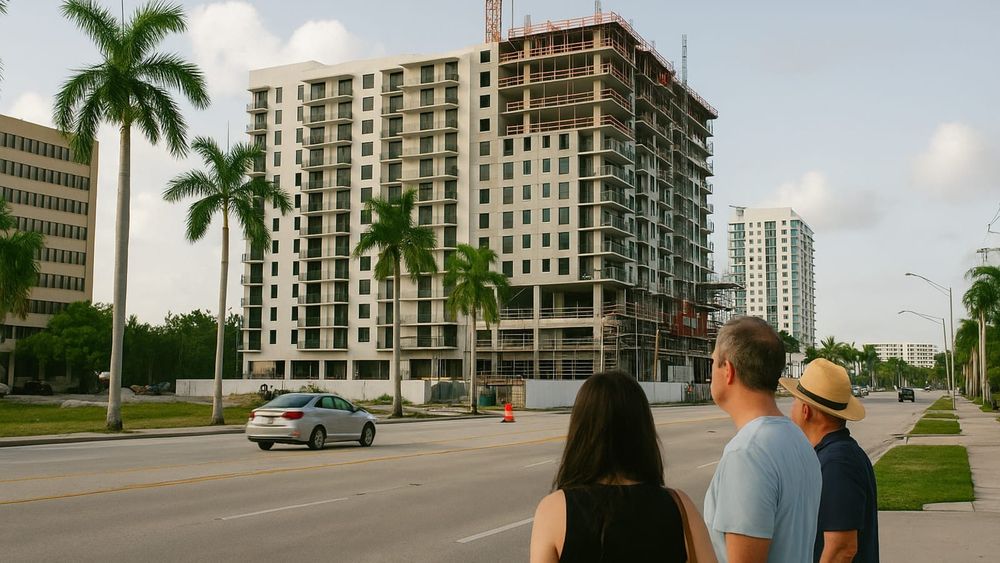
Snow reported that Miami has already had to approve 82 development projects under the Live Local Act. Despite these approvals, only two of those projects are currently under construction. This gap highlights a growing disconnect between approved development capacity and actual construction.
Under normal Miami 21 rules, any project exceeding 200,000 square feet must undergo administrative review. The state law removes these public hearings and neighborhood notifications, allowing developers to secure administrative approval directly. Chairwoman King criticized this lack of oversight, calling the policy a failure to protect historic residential neighborhoods. While District 4 Commissioner Ralph Rosado acknowledged South Florida's critical workforce housing shortage, commissioners agreed that the state's top-down mechanism leaves the city with zero control over high-density towers in already congested transit corridors.
Sovereign Immunity and the Threat of HB 1389
The legal environment grew more complex immediately after the commission vote. On June 26, 2026, Governor Ron DeSantis signed House Bill 1389, also known as Live Local 4.0, which took effect on July 1, 2026. This amendment introduces severe financial risks for cities that oppose these developments.
HB 1389 amends the Florida Fair Housing Act to waive local governments' sovereign immunity from lawsuits. Under this provision, developers can sue municipalities directly for damages and injunctions if a court finds that the local government discriminated against affordable housing in land-use and permitting decisions. This waiver increases the financial exposure for cities attempting to block projects.
The new amendment also closes design loopholes that cities previously used to manage scale. It prohibits municipalities from using dimensional standards, including setbacks and stepbacks, to restrict the height of Live Local developments.
The legislation introduces further mandates for local planning departments. HB 1389 requires municipalities to approve affordable housing on faith-owned land of at least three acres, provided an active place of worship has operated there for at least 10 years. It also mandates that most local governments pass ordinances allowing accessory dwelling units in single-family residential areas by December 1, 2026.
A Growing Network of Municipal Resistance
Miami is joining other Florida municipalities in challenging the state's zoning preemptions. On March 6, 2026, Hillsborough County filed a lawsuit in the Leon County Circuit Court challenging the constitutionality of the Live Local Act. The county argues that the law improperly strips local governments of their zoning powers and violates the First Amendment rights of citizens by eliminating public hearings.
In late March 2026, Broward County Circuit Court Judge David A. Haimes ruled in favor of Hollywood in its legal dispute with developer Condra Property Group. The developer sought to build a 17-story oceanfront tower using the Margaritaville Hollywood Beach Resort as its height benchmark. Judge Haimes ruled that Hollywood could reject the height comparison because the Margaritaville resort stands in a specialized governmental use zone.
Following this decision, Hollywood used state preemption rules in its own favor. In June 2026, the city invoked provisions of the Act regarding government-owned land to revive a city-owned beachfront project that Broward County had previously rejected.
The Development Pipeline and the Path Forward
South Florida serves as the primary battleground for these zoning fights. Out of more than 200 Live Local projects proposed across Florida in 2026, approximately 55 percent sit in South Florida. Developers utilize the state law to bypass local opposition and fast-track complex projects. In Fort Lauderdale, developers bypassed intense neighborhood pushback to advance a redevelopment of the Galleria Mall site, a project that had previously failed three times under standard municipal zoning procedures due to community resistance.
Miami's legal review will evaluate whether to join Hillsborough County’s active lawsuit or file a separate action focusing on the specific impact to the Miami 21 framework. City Attorney George Wysong is preparing an analysis of these options.
The legal battle will define how South Florida grows. Local business owners and real estate developers are monitoring the city's next steps closely, as any formal lawsuit will test the limits of municipal home rule against the state's push for rapid housing density.
Disclosure: This article was drafted with AI assistance by The Sundaze Gazette editorial team and reviewed before publication.