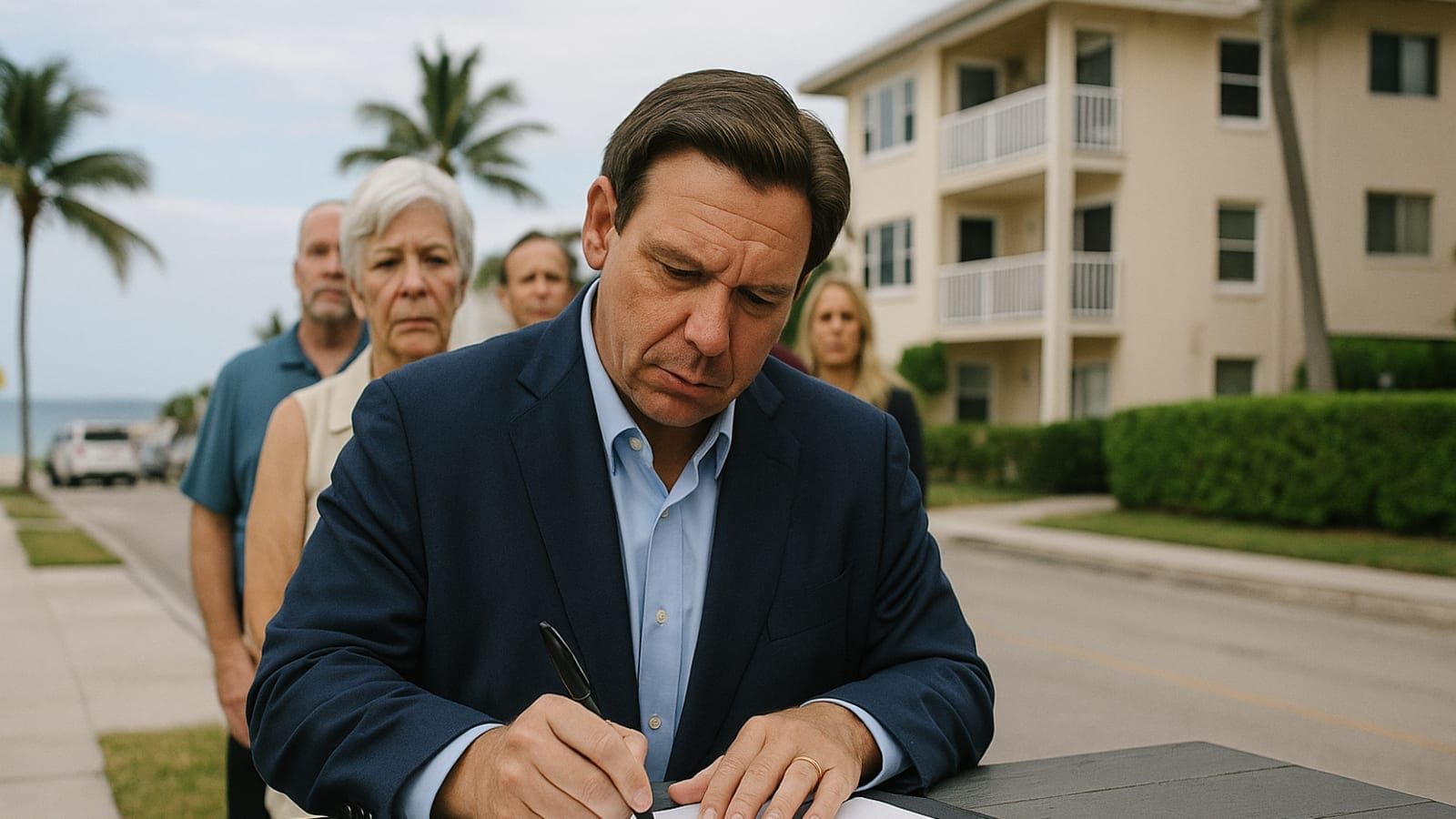
Governor Ron DeSantis signed House Bill 1389 on June 26, 2026, dismantling sovereign immunity for Florida municipalities that block affordable housing projects. This policy shift, known as Live Local 4.0, took effect July 1, 2026, stripping local governments of their primary legal shield against developer lawsuits.
Dismantling the Sovereign Immunity Shield
Under the new legislation, municipal attorneys can no longer use sovereign immunity to shield local governments from fair housing lawsuits. The law amends the Florida Fair Housing Act to waive sovereign immunity for local governments when developers allege land-use or permitting discrimination based on affordable housing designations.
This legislative fix stems from a legal battle in Broward County. In 2021, Coral Rock Development Group proposed an affordable townhome project in Pompano Beach. The city rejected the proposal due to its financing structure. Shortly after, the city approved a similar development on the same site, forcing the new builder to sign a covenant prohibiting affordable housing on the land. Coral Rock sued Pompano Beach for housing discrimination. On December 4, 2024, the Fourth District Court of Appeal ruled in City of Pompano Beach v. Coral Rock Development Group, LLC that the state's Fair Housing Act did not waive sovereign immunity, leaving the developer without a legal path to pursue damages.
Coral Rock principal Michael Wohl lobbied Tallahassee lawmakers to close the loophole. Wohl stated that the prior ruling told cities they could block affordable housing without facing legal consequences. With the passage of HB 1389, local governments that block projects based on income limits face civil-rights liability and damages in court.
Mandatory Religious and Public Land Expansion
House Bill 1389 transforms the "Yes in God's Backyard" initiative from a voluntary local option into a mandatory statewide zoning preemption. Local governments must administratively approve qualifying affordable housing projects on land owned by religious institutions, bypassing local zoning boards.
To qualify for this mandatory path, the religious institution's property must exceed three acres and contain an active house of public worship operating for at least 10 years. Developers must also restrict at least 40% of the residential units as affordable or workforce housing for a minimum of 30 years.
The law also opens public parcels owned by counties, municipalities, and school districts to affordable housing development. To bypass local zoning on these public lands, the public entity must co-apply with the private developer. This provision allows school districts and cities to convert vacant school board land and underutilized public parcels into workforce housing without undergoing lengthy public zoning reviews.
Guarantees for Developers and Tax Incentives
Developers gain regulatory and financial certainty under Live Local 4.0. The law bars local governments from using dimensional setbacks or stepbacks to limit the allowable height of a qualifying Live Local project. This prevents municipal boards from forcing stepbacks on upper floors to restrict high-density buildings.
The bill provides financial security to lenders and developers by locking in property tax exemptions early. Property tax exemptions for middle-market units vest when the city issues the building permit, for permits issued on or after July 1, 2026. This allows developers to underwrite projects with guaranteed tax savings before starting construction.
The law restricts the ability of local taxing authorities to opt out of the 75% ad valorem tax exemption for middle-market units targeting families earning 80% to 120% of the area median income. Previously, a city could opt out if it proved a local housing surplus for one year. Now, local governments must use Shimberg Center for Housing Studies data to demonstrate an affordable housing surplus for three consecutive years to revoke the exemption. Legal reviews by firms like Bilzin Sumberg outline detailed breakdowns of these guidelines.
Municipal Resistance and Legal Battles
South Florida municipalities are challenging the state's zoning preemptions. On June 25, 2026, the Miami City Commission voted 4 to 0 to approve a resolution directing City Attorney George Wysong to explore legal challenges to the Live Local Act. Commissioner Miguel Gabela was absent from the vote. The resolution instructs Wysong to examine home-rule authority and municipal due process while exploring options to join existing statewide lawsuits.
Other Florida counties have already taken direct legal action. Hillsborough County filed a lawsuit in Leon County Circuit Court on March 6, 2026, challenging the constitutionality of the Live Local Act on the grounds that it violates municipal zoning authority.
Cities are testing the limits of the law in court. In March 2026, Broward County Circuit Court Judge David A. Haimes ruled in favor of the City of Hollywood against developer Condra Property Group. The developer wanted to build a 17-story beachfront tower using the nearby Margaritaville resort as its height benchmark. Judge Haimes ruled that because Margaritaville sits on a property zoned for government use, the developer could not use it to establish height limits for private land.
In contrast, Hollywood used the public-land co-application provision in May 2026 to push through Portofino Hollywood, a 27-story beachfront tower built with the Related Group on city-owned parkland. The Hollywood City Commission voted 5 to 2 to incorporate Live Local rules into the agreement. The city traded local control over the 210-unit project for 84 workforce housing units, preventing Broward County from blocking the tower's height or density.
Disclosure: This article was drafted with AI assistance by The Sundaze Gazette editorial team and reviewed before publication.